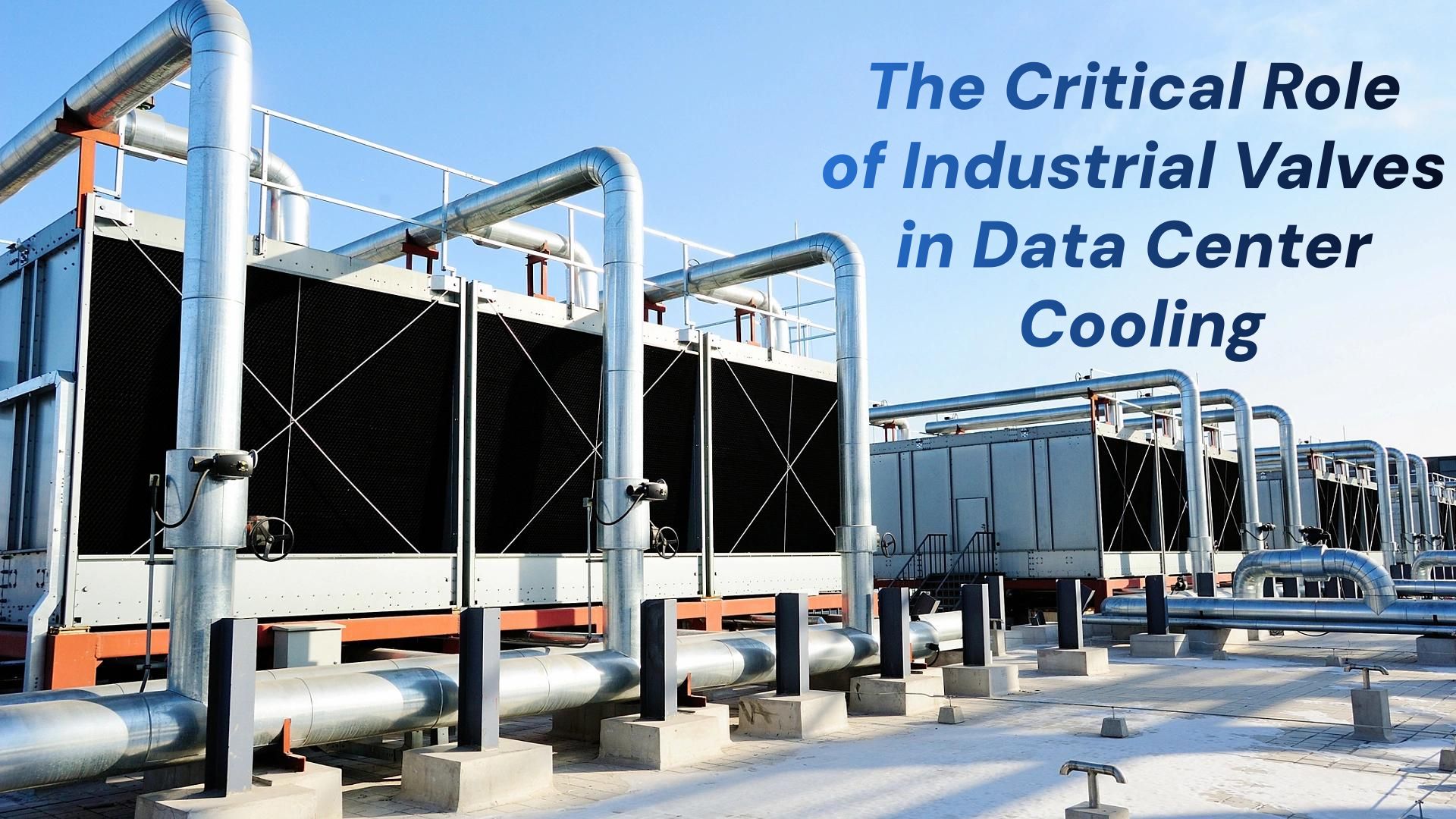
The Critical Role of Industrial Valves in Data Center Cooling
Table of Contents
The rapid expansion of AI computing clusters have brought huge thermal load pressure to hyperscale data centers. The traditional air conditioning systems can no longer meet the heat dissipation requirements. Therefore, liquid cooling technology has evolved from an optional add-on scheme to a standard solution for the core infrastructure of data centers. As a key component, the valve maintains a stable fluid circulation in the whole cooling pipeline system. According to QY Research statistics, the global data center cooling valve market reached a total value of $714 million in 2025. The market is projected to hit $2.416 billion by 2032. It achieves a compound annual growth rate of 17.5% during the forecast period. The performance of cooling valves can directly determine the safety, operating efficiency and continuous uptime of the whole cooling network. Improper valve selection will lead to risks such as fluid leakage, unbalanced pipeline flow and localized overheating of server hardware. For Tier III and Tier IV high-grade data centers, these seemingly minor failures may quickly lead to significant economic losses.
As a leading valve manufacturer for global brands, we provide dedicated cooling valve solutions. And the valves are tailor-made for chilled water circuits and direct liquid cooling scenarios. In this article, we will explain the matching rules between valves and different cooling system standards. In addition, we will summarize typical design errors that occur in actual engineering applications. Our technical sharing aims to provide effective references for your engineering parameter design and upcoming project deployment work.
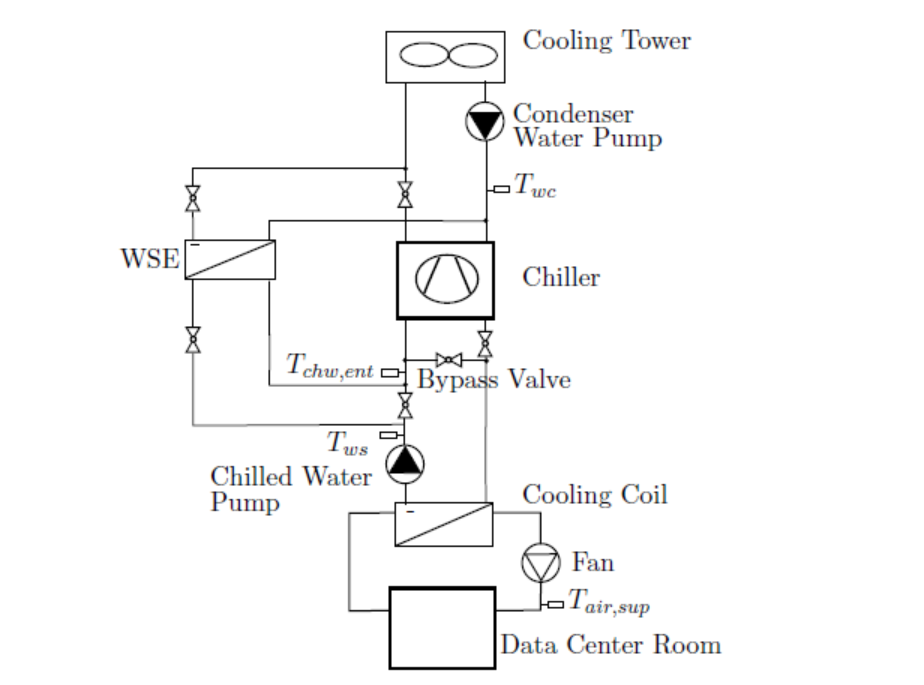
Image Credit: Modelica Buildings Library
Why are Data Center Cooling Valves Crucial to AI Infrastructure?
How Can Cooling Valve Failures Cause Costly Data Center Outages?
According to the statistics of Uptime Institute, unplanned mechanical failures of cooling systems account for nearly 15% of data center shutdown events. Common valve-related faults include internal leakage, valve jamming, external medium seepage and seal degradation.
What problems will these valve failures bring? If the valves can’t isolate faulty pipeline sections normally, the maintenance teams can’t carry out offline pipeline repairs, and finally they can only be forced to close the connected server racks. This will bring huge economic costs to the data center. Internal leakage is another major hidden danger. Because it will destroy the preset flow balance of the cooling systems and lead to local hot spots in high-power AI server racks. These AI racks are extremely sensitive to ambient temperature fluctuations.
The operating environment of data centers is far more severe than that of ordinary industrial workshops. Their cooling systems operate all the time. This continuous operation mode puts high demands on the fatigue resistance of all valve components. Without reliable valves, the system uptime cannot be guaranteed.
| Failure Mode | Root Causes | Direct Impacts on Data Center Operation |
|---|---|---|
| External medium leakage | Degraded seat, loose flange connection, improper installation | Floor flooding, equipment corrosion, electrical short circuit risks |
| Internal leakage | Worn sealing surface, contaminated cooling fluid | Unbalanced pipeline flow, local server hotspots, unstable PUE |
| Actuator jamming | Insufficient maintenance, pipeline impurities trapped in valve cavity | Inability to remotely switch or isolate pipelines during alarms |
| Seal degradation | Material incompatibility with glycol coolant, long-cycle operation | Gradual performance decay, frequent component replacement |
How to Re–select Cooling Valves Due to the Power Density?
The power load of traditional data center racks is usually between 5 kW and 10 kW. However, the operating conditions of modern data centers have fundamentally changed. At present, the power consumption of AI training racks often exceeds 30 kW, and some newly introduced direct liquid cooling designs can even support rack loads above 80 kW. Higher heat loads put forward new requirements for the cooling system. The stable operating conditions of server devices require not only larger coolant flow rates, but also ultra-precise flow control.
Standard commercial HVAC valves are not suitable for high-intensity operating conditions in modern AI data centers. This kind of ordinary valves can not withstand the elevated system pressure in liquid cooling loops, nor can they achieve stable chemical compatibility with water-glycol mixtures widely used in liquid cooling systems in data centers. Professional data center cooling valves must meet the far stricter industry standards, have a higher upgraded pressure resistance, and maintain a stable sealing performance after long-term cyclic operation.
Which Cooling Systems in Modern Data Centers Need Dedicated Valves?
Valve Configuration of Conventional Chilled Water Cooling Loops
Primary chilled water loops rely on centralized cooling towers to transport low-temperature water to the whole data center. These systems use large-diameter main pipelines to transport coolant to air handler units in server room. Large-size isolation valves are very important for these main pipelines. They enable operators to stop and maintain a single facility zone without interrupting the operation of the whole data center. Smaller branch pipelines supply cooling liquid for independent computer rooms, and these branches need compact shut-off valves to support independent pipeline control.
What are the standard operating parameters of chilled water loops in data center projects? The systems usually operate in the temperature range of 4 °C to 18°C, with purified water as the cooling medium. The design pressure of most systems is 0.6 MPa to 1.0 MPa, which matches the valve rating of Class 150. A few cooling systems need a higher pressure-resistant grade, and this kind of special scene needs to use Class 300-rated valves. The corrosion risk of chilled water loop environment to valve components is low, but filtration equipment is still indispensable for system operation-impurities and sediment will accumulate in the pipeline after long-term operation. Standard filtration setup can keep the whole cooling system clean and avoid abnormal operational issues.
Liquid Cooling Loop Designs and Corresponding Valve Specifications
Secondary glycol loops and CDU direct liquid cooling systems have become the mainstream cooling schemes for the next generation AI data center. Ethylene glycol can effectively prevent the coolant from freezing in low ambient temperature environments. However, glycol-based fluids will accelerate the aging speed of ordinary rubber sealing parts, and conventional standard sealing materials cannot adapt to this working condition. Therefore, professional cooling systems need upgraded sealing structures. PTFE and EPDM are ideal materials for this kind of scene-both materials have excellent resistance to glycol corrosion and can maintain long-term stable sealing performance in glycol mixed fluid environments. Without these upgraded sealing configurations, the valves will face higher leakage risks, and the overall stability and reliability of the cooling system will also be greatly reduced.
| System Type | Cooling Medium | Core Valve Requirements | Preferred Valve Types |
|---|---|---|---|
| Primary Chilled Water Loop | Purified water | Large flow capacity, reliable isolation, low maintenance | Butterfly valves, Y strainers |
| CDU Direct Liquid Cooling Loop | Water-glycol mixture | Anti-corrosion, high sealing performance, frequent switching stability | Ball valves, globe valves |
What Valves Are Used in Data Center Cooling for Pipeline Applications?
This is a very common question in the industry. Ball valves and butterfly valves are the primary options for system shut-off scenarios. They deliver stable performance and simple operation in daily use. Gate valves, globe valves and Y-strainers take charge of flow regulation and pipeline protection work. These valve categories work together to form a full set of supporting valve solutions for complete data center cooling systems.
Ball Valves and Butterfly Valves: On-off Control of Main Pipes and Branch Pipes
Ball valves have the characteristics of low flow resistance and fast switching response, and are very suitable for connecting branch pipelines of CDU units. In case of emergency, they can complete emergency isolation of independent liquid cooling racks. Compact actuators can be installed on ball valves to realize automatic remote control.
Butterfly valves are most suitable for large-diameter main chilled water pipelines. Their lightweight structural design can reduce the overall construction cost of the data center project, and the installation space is less than that of traditional valve products. This has become a practical engineering advantage for mechanical rooms with dense equipment and limited space. For this reason, butterfly valves are widely applied to horizontal main pipes of large-scale data center chilled water systems.
| Parameter | Ball Valve | Butterfly Valve |
|---|---|---|
| Applicable Pipe Diameter | DN15 – DN200 | DN50 – DN1200 |
| Flow Resistance | Very low | Moderate |
| Main Application | CDU branch isolation, small liquid cooling loops | Large chilled water main pipelines |
| Suitable Control Mode | On / Off switching | On / Off and basic throttling |
Gate Valves, Globe Valves and Y–strainers for Regulation and Pipeline Protection
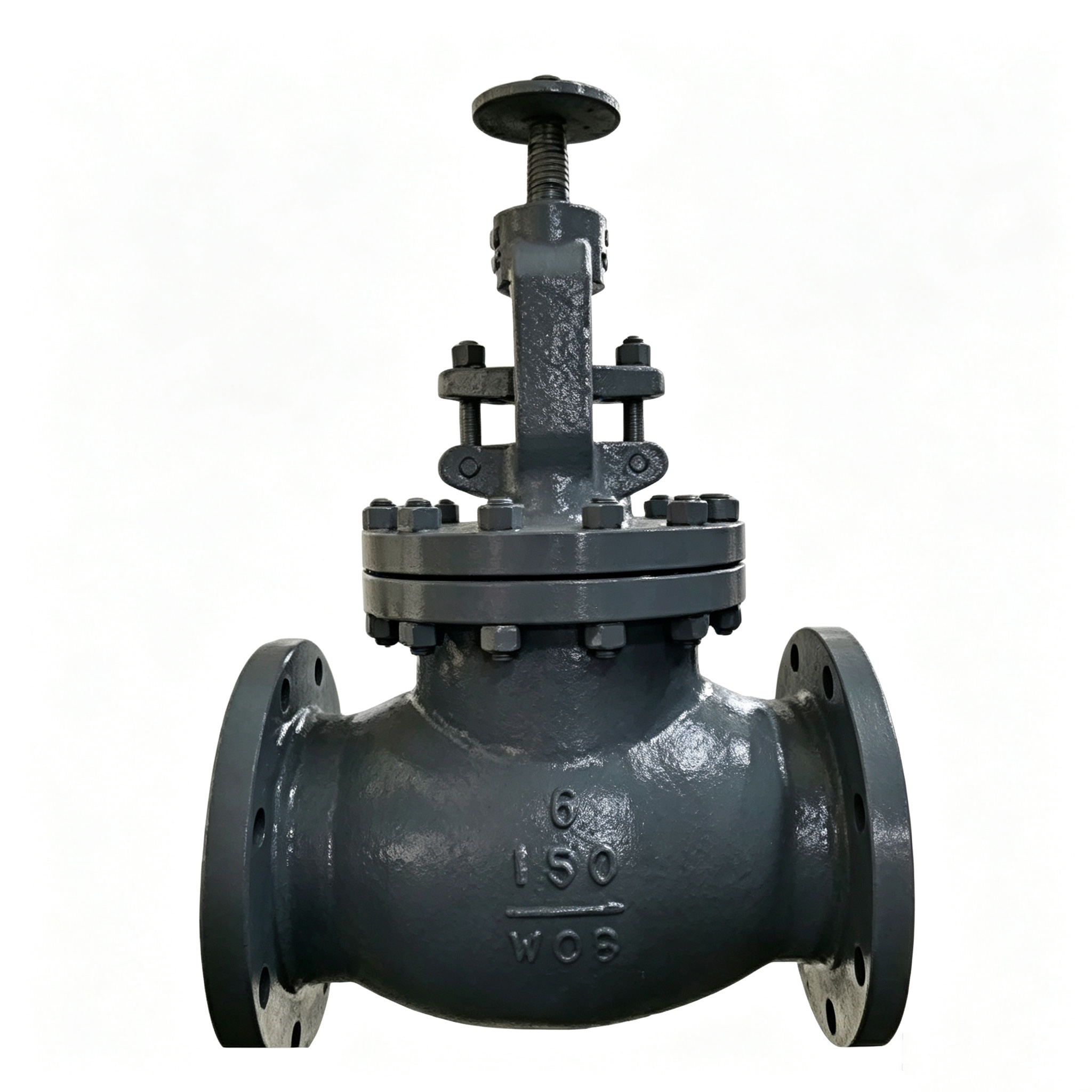
Globe valves have precise flow throttling capabilities, and are usually installed on balancing pipelines to finely adjust the coolant distribution in different server zones. So they can effectively eliminate the thermal imbalance issues in cooling systems.
Gate valves are suitable for long-term full-open pipe sections that require unobstructed, low-resistance fluid circulation. This kind of pipe section rarely needs to be opened and closed, and gate valves can perfectly meet the demand of this stable long-term operation.
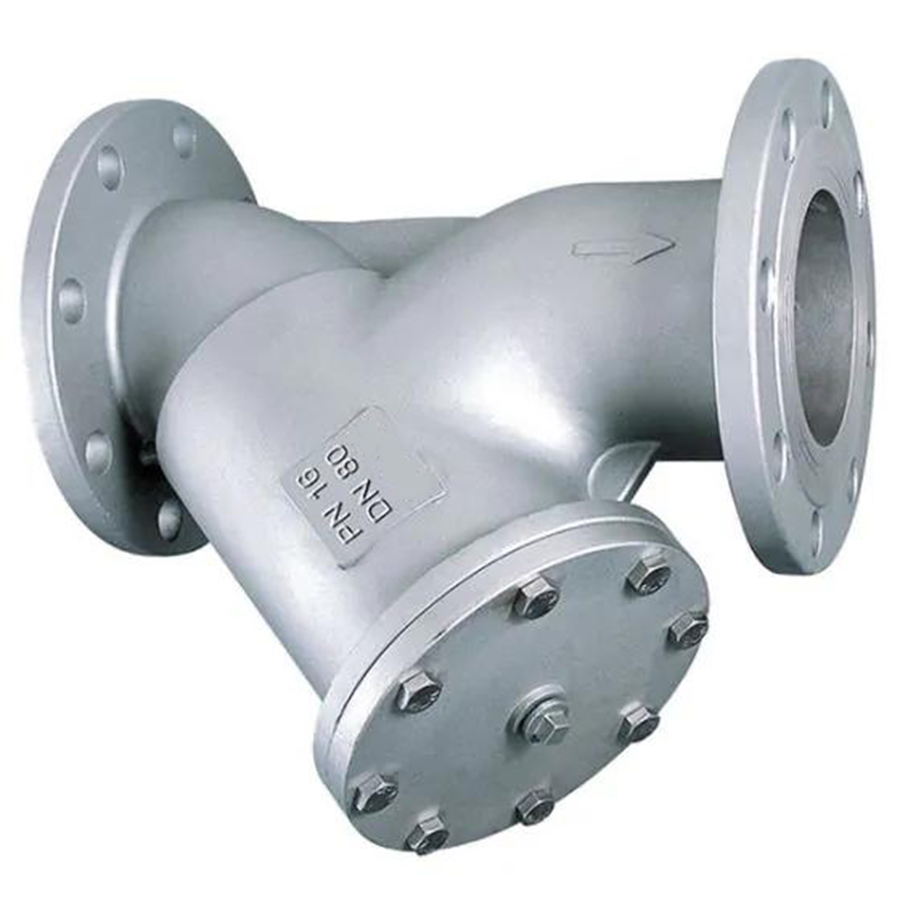
Y-strainers can capture solid particles, welding slag and sediment in circulating pipelines. These tiny impurities will scratch the heat exchange plates of CDU units and cause progressive wear and damage to water pumps in long-term operation. Most engineering design standards require that Y-strainers be installed at the front end of core cooling equipment. This basic configuration can protect high-value downstream components from wear and failure.
How to Select Materials for Data Center Liquid Cooling Valves?
Material compatibility is a key factor in the design of cooling systems. Mismatched materials are the primary cause of premature valve failures in cooling pipeline circuits. The cooling water in data centers usually contains trace chloride ions. The valve bodies made of 304 stainless steel are prone to pitting corrosion under this working condition, which will gradually erode the valve body structure over time. Eventually, it may lead to medium leakage and system failure. 316 stainless steel is a more reliable choice. This material has excellent resistance to pitting corrosion, and can keep stable performance in long-term 7×24 hours continuous operation. For the data center project with the primary goal of sustained uptime, the difference in the performance of this material has a decisive impact on the overall system reliability.
| Component | Medium: Purified Chilled Water | Medium: Water-Glycol Mixture |
|---|---|---|
| Valve body | WCB cast steel / 316 stainless steel | 316 stainless steel |
| Seat & Seal | EPDM, PTFE | PTFE, RPTFE |
Custom OEM Valve Solutions for Data Center Cooling Project
Standard off-the-shelf valves have inherent limitations in use, and often cannot meet the individual needs of customized data center projects. As a result, buyers often put forward differentiated customization requirements. Foe example, some projects need adjusted pressure ratings, and some need valves that meet specific flange standards. Many customers also need custom logo printing and unified technical documents to support project bidding. Professional valve manufacturers with flexible production capacity can deliver core values in these scenarios, bringing tangible advantages to the whole project supply chain. What’s more, it’s a common industry standard that hyperscale data center projects follow a fixed procurement workflow, and usually require sample testing before large-batch purchasing.
BallValve Technology provides complete OEM/ODM customization services based on engineering drawings, covering pressure grades, flange standards, valve materials and private labeling. Distributors and EPC partners can launch their own brands of cooling valves without building their own production lines, thus reducing procurement costs and shortening time-to-market. We support pre-project verification, including sample delivery, third-party testing and material reports. Our engineering team works with MEP designers early on to optimize valve selection, lowering procurement costs, speeding construction, and avoiding delays or change orders.
Conclusion
The AI data center industry is experiencing rapid expansion, and continuously pushing up the standard threshold of cooling infrastructure in data centers. As the core fluid control components in the cooling system, cooling valves directly affect the PUE performance, operational stability and long-term maintenance expenditure of data centers. Improper valve selection will drag down the overall energy efficiency of the cooling systems.
The cooling system of a data center is composed of many types of cooling loops. Primary chilled water circuits and CDU liquid cooling systems have different operating requirements. Engineers need to select targeted valve types for different application scenarios. Material matching, actuator configuration and pipeline isolation layout are also key influencing factors. The design team must comprehensively evaluate all these elements in the early project stage. Ignoring any details will lay operational risks for the system, and will gradually be exposed in the long-term operation. The cost of correcting hidden faults after on-site installation is always much higher than that of standardized upfront design.
You need reliable and tailored fluid control solutions for your project. Standard ready-made valve products often can’t meet the customized project requirements. Are you looking for a stable and reliable product supplier? BallValve Technology provides flexible OEM, ODM and private labeling services, and tailors each valve scheme to meet the unique needs of data center cooling projects. If you need technical consulting, project quotations or sample support for the upcoming infrastructure projects, please feel free to contact us at [email protected]. Our team will communicate with you about the personalized project requirements and tailor the most suitable solution for your application scenario.
References
- QY Research Inc., Global Data Center Cooling Valves Market Report. https://www.qyresearch.com/news/14871/data-center-cooling-valve
- MarketsandMarkets, Data Center Liquid Cooling Valves Market Report (CH 10351). https://www.globenewswire.com/de/news-release/2026/05/11/3291592/28124/en/Data-Center-Liquid-Cooling-Valves-Market-Analysis-by-Valve-Type-Cooling-Type-Data-Center-Type-and-Region-Global-Forecast-to-2032.html
- Uptime Institute, 2025 Global Data Center Survey. https://www.vertiv.com/en-emea/about/news-and-events/articles/educational-articles/how-n1-redundancy-supports-continuous-data-center-cooling/
- LP Information Inc., Global Data Center Cooling Valves Market Growth 2026-2032. https://www.marketresearch.com/LP-Information-Inc-v4134/Global-Data-Center-Cooling-Valves-44927767/
- Computer Weekly, Datacentre outages decreasing in frequency, Uptime Institute Intelligence data shows. https://www.computerweekly.com/news/366623669/Datacentre-outages-decreasing-in-frequency-Uptime-Institute-Intelligence-data-shows

With nearly 20 years of full-cycle valve industry experience – from metallurgy to intelligent control – Steven drives industry standards. He excels in high-level design for water and petrochemical projects, builds engineering team capabilities, and delivers reliable, efficient, cost-effective valve solutions to all industrial end-users.