Floating Ball Valve vs. Trunnion Ball Valve – When Is Trunnion Necessary?
Table of Contents
Consider a high-pressure gas pipeline with a floating ball valve. At full pressure, the manual handle is nearly impossible to turn. The actuator is 40% undersized. This is not a manufacturing flaw — it is a design mismatch.
Floating and trunnion valves have different sealing principles, each for specific pressure, size, and applications. The decision depends on engineering physics, API standards, and field experience. At the leading ball valve manufacturer, we manufacture both floating and trunnion designs. From our experience, the right choice is not always obvious — yet the consequences of getting it wrong are significant.
This article reviews sealing mechanics, compares performance data, analyzes API 6D and API 608 requirements, and provides a clear decision framework. By the end, you will know exactly when a trunnion ball valve is not just an option but a necessity.
What Are the Fundamental Differences in How Floating and Trunnion Ball Valves Seal?
The core difference between floating ball valves and trunnion ball valves rests on ball fixing structures and sealing force generation modes. These structural differences change the valve’s rotating torque, pressure bearing capacity, applicable size range and daily maintenance difficulty.
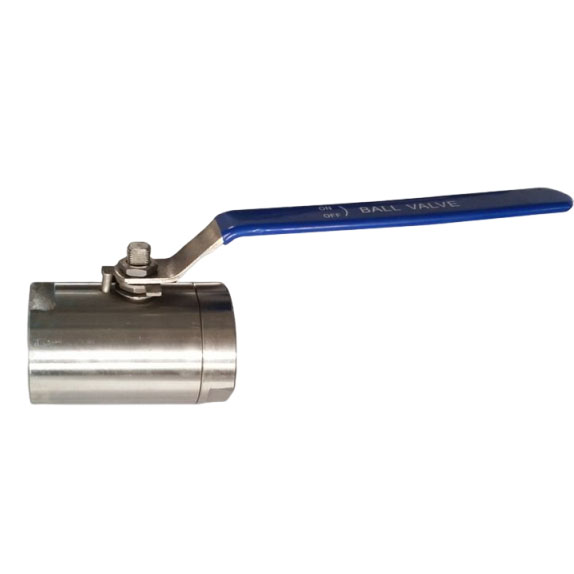
Floating Ball Valve — How Pressure-Assisted Sealing Works
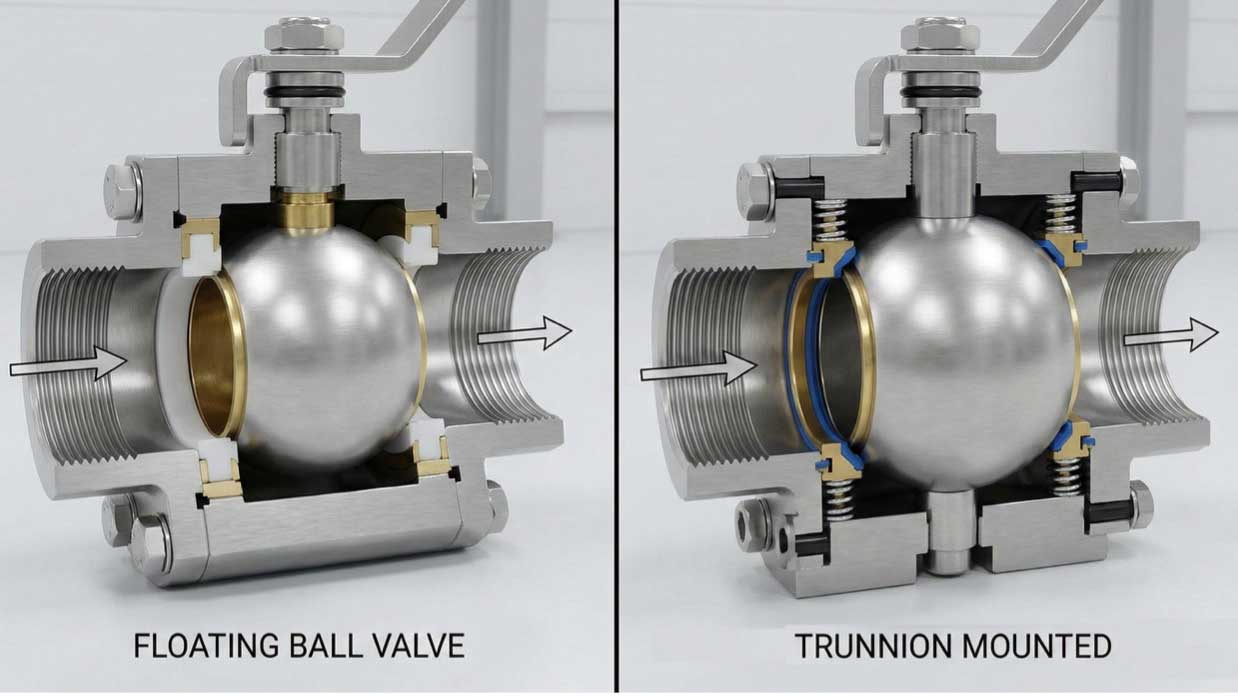
In a floating ball valve, the ball is not mechanically fixed within the body. Instead, it is held in position by the valve seats, with a small amount of clearance that allows it to drift downstream. When closed, upstream line pressure pushes the ball against the downstream seat, creating the seal. Higher pressure makes the seal tighter — a self-energizing mechanism effective at low-to-moderate pressures.
However, this design has an engineering limitation: the ball is free to move, but it is not free to ignore the force exerted by the process fluid. As pressure increases, the ball presses harder against the seat, which increases friction at the ball-seat interface. The operating torque rises with pressure. For a given size, torque at Class 600 can be several times higher than at Class 150. For larger sizes, the weight of the ball itself contributes to the load on the seats, compounding the problem.
This is why most floating ball valves are manufactured with soft seats (PTFE, R-PTFE, or TFM) to reduce friction, and why they are typically limited to Class 150–600 and sizes up to 8-10 inches. Above these thresholds, the operating torque becomes impractical, and seat stress leads to premature wear.
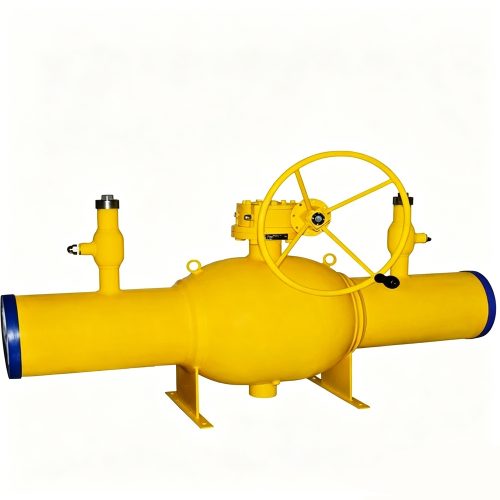
Trunnion Ball Valve — How Fixed-Ball, Floating-Seat Design Works
A trunnion ball valve reverses the geometry. The ball is mechanically anchored by upper and lower support shafts (trunnions) and bearings embedded in the body. The ball has no axial movement — it only rotates.
Floating vs. Trunnion Ball Valve — Design Characteristics
| Parameter | Floating Ball Valve | Trunnion Ball Valve |
|---|---|---|
| Ball support | Free-floating (no bearings) | Fixed on trunnion bearings |
| Sealing principle | Ball presses against downstream seat | Spring-loaded seats press against ball |
| Operating torque | Increases with pressure | Relatively constant |
| Practical size limit | 8″–10″ | 60″+ |
| Pressure classes | Class 150–600 | Class 150–2500 |
| Double block and bleed | No (single downstream seal) | Yes (both seats seal independently) |
| Cavity pressure relief | Not required | Required |
| Standards | API 608 | API 6D, API 608 |
| Typical entry style | Side entry | Side entry or top entry |
Instead of the ball moving to the seat, the seats move to the ball. Each seat ring is spring-loaded, and the seat is forced against the ball by a combination of spring preload and line pressure. The sealing force is largely decoupled from the line pressure, meaning that operating torque is relatively constant across the pressure range. This makes trunnion designs inherently suitable for high-pressure (Class 150-2500) and large-diameter (up to 60 inches and beyond) applications.
But the advantages go beyond torque. The trunnion design enables Double Block and Bleed (DBB) capability — a critical safety feature we will explore in depth later.
When Does Pressure and Size Make Trunnion the Only Practical Choice?
The Critical Threshold — 8 Inches and Class 300
Industry practice has established a practical boundary between floating and trunnion designs at approximately 8 inches and Class 300. Above this combination, the force required to push a floating ball against its seat becomes so large that actuator torque, seat stress, and operating effort become unmanageable.
The physics is straightforward: the force on the ball is the product of pressure and the projected area of the ball bore. At 8 inches and 740 psi (Class 300), the hydrostatic end force on the ball is approximately 37,000 pounds. That force must be overcome to rotate the ball — and it increases with the square of the diameter. At 12 inches and Class 300, the force exceeds 83,000 pounds. At Class 600, it is roughly double that.
A trunnion valve eliminates this force from the torque equation because the ball is fixed and the seats are moving. The torque required to rotate a trunnion valve is driven primarily by the friction between the seats and the ball, which is determined by spring preload — not by line pressure.
When the line pressure exceeds Class 300 or the size exceeds 8 inches, a floating ball valve is almost never the right choice. Engineers who specify floating valves above this boundary often find themselves with oversized actuators, excessive wear, and unreliable operation.
The Torque Problem — Quantifying the Difference
Let us put numbers to the problem. For a 6-inch Class 150 floating ball valve, the operating torque is approximately 450 ft-lbs. The same valve in a trunnion design requires only about 180 ft-lbs — a 60% reduction. As pressure increases, the gap widens.
In addition to the direct torque reduction, the trunnion design allows for a smaller actuator — often 30–50% smaller than what would be required for a floating valve in the same service. This translates to significant cost savings in actuator procurement, mounting hardware, and control accessories.
When Do Application Requirements Mandate Trunnion Ball Valves?
Beyond the size and pressure boundary, several application-specific requirements make trunnion ball valves mandatory — regardless of whether the valve is above or below the size/pressure threshold.
Double Block and Bleed (DBB) — A Safety Requirement for Critical Services
DBB is defined by API 6D as: “a single valve with two seating surfaces that, in the closed position, provides a seal against pressure from both ends of the valve with a means of venting/bleeding the cavity between the seating surfaces.”
A trunnion ball valve with two independently sealing seats and a body cavity bleed port provides true DBB. In the closed position, both the upstream and downstream seats seal independently against the ball. Opening the bleed valve allows verification that both seals are holding — if pressure is present at the bleed, one seal is leaking.
This is fundamentally impossible with a floating ball valve, because only the downstream seat is loaded. The upstream seat does not seal in the closed position.
When is DBB required?
It is important to distinguish between DBB and DIB (Double Isolation and Bleed). API 6D recognizes both. In a DIB valve, both seats seal from the same direction, providing redundant protection against downstream leakage. DIB is typically specified when there is a low tolerance for leakage or when the process fluid contains abrasive material that could promote seat wear.
Cavity Relief — A Unique Trunnion Valve Design Consideration
Trunnion ball valves can trap fluid in the body cavity when closed. If the trapped fluid heats up, thermal expansion can cause cavity pressure to exceed the valve’s design limit — potentially leading to hazardous overpressure and valve damage.
API 6D requires that trunnion valves include cavity pressure relief — either through a self-relieving upstream seat or an external relief valve. This requirement reflects the higher consequence of valve failure in pipeline service, where isolation may be the only barrier between high-pressure hydrocarbon and the environment.
Floating ball valves do not typically require cavity relief because the ball-to-seat geometry and downstream-only sealing prevent significant fluid entrapment in the cavity.
High-Pressure Gas, Pipeline, and Extreme Temperature Services
Trunnion ball valves are the standard for:
In hydrogen service, trunnion ball valves with “Hydrogen Ready” design features are emerging, with some manufacturers offering designs rated to API 10000 psi. The fixed-ball geometry minimizes galling and wear, and the metal-to-metal seating (with PTFE or PEEK inserts) provides the tight shutoff required for hydrogen containment.
How Do API 6D and API 608 Standards Influence Valve Selection?
The selection between floating and trunnion ball valves is not just a technical decision — it is also a standard-driven decision. API 6D and API 608 are the two primary standards, and they reflect fundamentally different design philosophies and risk profiles.
API 6D vs. API 608 — What’s the Difference and Why It Matters
API 6D covers “pipeline and piping valves” — that is, valves used in pipeline transportation systems: cross-country pipelines, gathering systems, and distribution networks. The standard places a premium on safety and reliability because valve failure in pipeline service can have catastrophic environmental and safety consequences.
Key API 6D Requirements:
API 608 covers “metal ball valves — flanged, threaded, and welding ends” for process facility applications: refineries, chemical plants, gas processing plants, and offshore platforms. The standard reflects the additional safety layers present in a process facility (control systems, safety relief devices, fire protection) and allows for more economical designs.
Key API 608 Allowances:
API 6D vs. API 608 — Key Differences and Implications
| Feature | API 6D | API 608 |
|---|---|---|
| Scope | Pipeline transportation systems | Petroleum and natural gas process facilities |
| Valve types covered | Ball, gate, check, plug (pipeline) | Ball valves only |
| Ball design | Trunnion (standard), floating (small sizes) | Floating and trunnion |
| Bore | Full bore mandatory | Full or reduced bore |
| Size range | 2″ to 60″+ | 1/2″ to 36″ |
| Pressure classes | 150–2500 | 150–2500 |
| Double block and bleed | Required (Appendix A) | Not required (optional) |
| Cavity relief | Required | Not required |
| Fire testing | API 607 mandatory | API 607 optional |
| Low-pressure seat test | Required (60–100 psig gas) | Not required |
| Documentation | Extensive (MTR, NDE, witnessed tests) | Standard per manufacturer's QMS |
The implication for the floating vs. trunnion decision:
- If your application falls under API 6D jurisdiction (pipelines, long-distance transmission, gathering systems), the standard essentially mandates a trunnion design with DBB and cavity relief for any valve of significant size or pressure rating.
- If your application falls under API 608 (process facilities), both floating and trunnion designs are permissible — and the decision should be driven by technical requirements and cost considerations.
What Are the Total Cost of Ownership (TCO) Implications of Choosing Trunnion?
Initial Cost vs. Lifecycle Cost — The Real Economic Picture
It is no secret that trunnion ball valves have a higher upfront cost. The initial cost of a trunnion valve is typically 2 to 4 times that of a comparable floating valve in the same size and pressure class. For example, a 6-inch Class 150 floating valve may cost $1,500–$2,500, while a trunnion valve in the same specification can range from $4,000 to $10,000 or more.
The cost premium is driven by:
-
Additional components (bearings, trunnion shafts, multiple seat rings)
-
More complex machining and assembly
-
Stricter material and testing requirements (API 6D vs. API 608)
-
Heavier construction (weight of a 6-inch Class 150 trunnion is about 100 kg vs. 40 kg for a floating valve)
However, the total cost of ownership (TCO) often tells a different story. In demanding applications, a trunnion valve can achieve cost parity in as little as 3–4 years through:
Maintenance and Downtime — The Hidden Cost Driver
Floating ball valves generally require full valve disassembly for seat replacement, which can take 4–6 hours and requires draining the line and removing the valve from the pipeline. Trunnion ball valves, particularly those with a top-entry design, allow seats to be replaced in-line without removing the valve body — typically in 1–2 hours.
For a continuous production plant, the difference in downtime can be worth hundreds of thousands of dollars per event.
Cost and Maintenance Comparison
| Metric | Floating Ball Valve | Trunnion Ball Valve |
|---|---|---|
| Initial cost (6″ Class 150) | Baseline | 2–4× baseline |
| Weight (6″ Class 150) | ~40 kg | ~100 kg |
| Maintenance interval | 5,000–8,000 cycles | 15,000–25,000 cycles |
| Seat replacement | Full disassembly (4–6 hours) | In-line (1–2 hours, top-entry design) |
| Actuator size | Standard | 30–50% smaller at high pressure |
| TCO payback (severe service) | N/A | ~3–4 years |
Conclusion
Floating ball valves are the right choice for:
Trunnion ball valves are the only practical choice when:
The threshold is not a fuzzy recommendation — it is a rule rooted in physics and 70 years of field experience: above 8 inches and Class 300, do not specify a floating ball valve. The operating torque will be excessive, the seat stress will be high, and the maintenance costs will outweigh the initial savings.
At Ballvalve Technology, we offer a full range of both floating and trunnion ball valves, engineered to meet API 608 and API 6D requirements. Visit our product pages or contact us at [email protected] to discuss your specific requirements.
FAQ
References
-
Projectmaterials. (2023). Floating vs Trunnion Ball Valve. https://blog.projectmaterials.com/quick-answers/valves/floating-vs-trunnion-ball-valve/
-
Projectmaterials. (2023). API 6D vs API 608: Ball Valve Standards. https://blog.projectmaterials.com/quick-answers/valves/api-6d-vs-api-608/
-
Projectmaterials. (2024). What Is DBB Valve? Double Block and Bleed. https://blog.projectmaterials.com/quick-answers/valves/what-is-dbb-valve/
-
Val-Matic Valve & Mfg. Corp. (2021). DBB and DIB Seating for Trunnion Mounted Ball Valves. http://www.valmatic.com/Portals/0/pdfs/DBB_DIB_BallValves_9-21.pdf
-
American Water Works Association (AWWA) – Selecting the Right Ball Valve: Floating Versus Trunnion. https://awwa.onlinelibrary.wiley.com/doi/abs/10.1002/opfl.1744

With nearly 20 years of full-cycle valve industry experience – from metallurgy to intelligent control – Steven drives industry standards. He excels in high-level design for water and petrochemical projects, builds engineering team capabilities, and delivers reliable, efficient, cost-effective valve solutions to all industrial end-users.