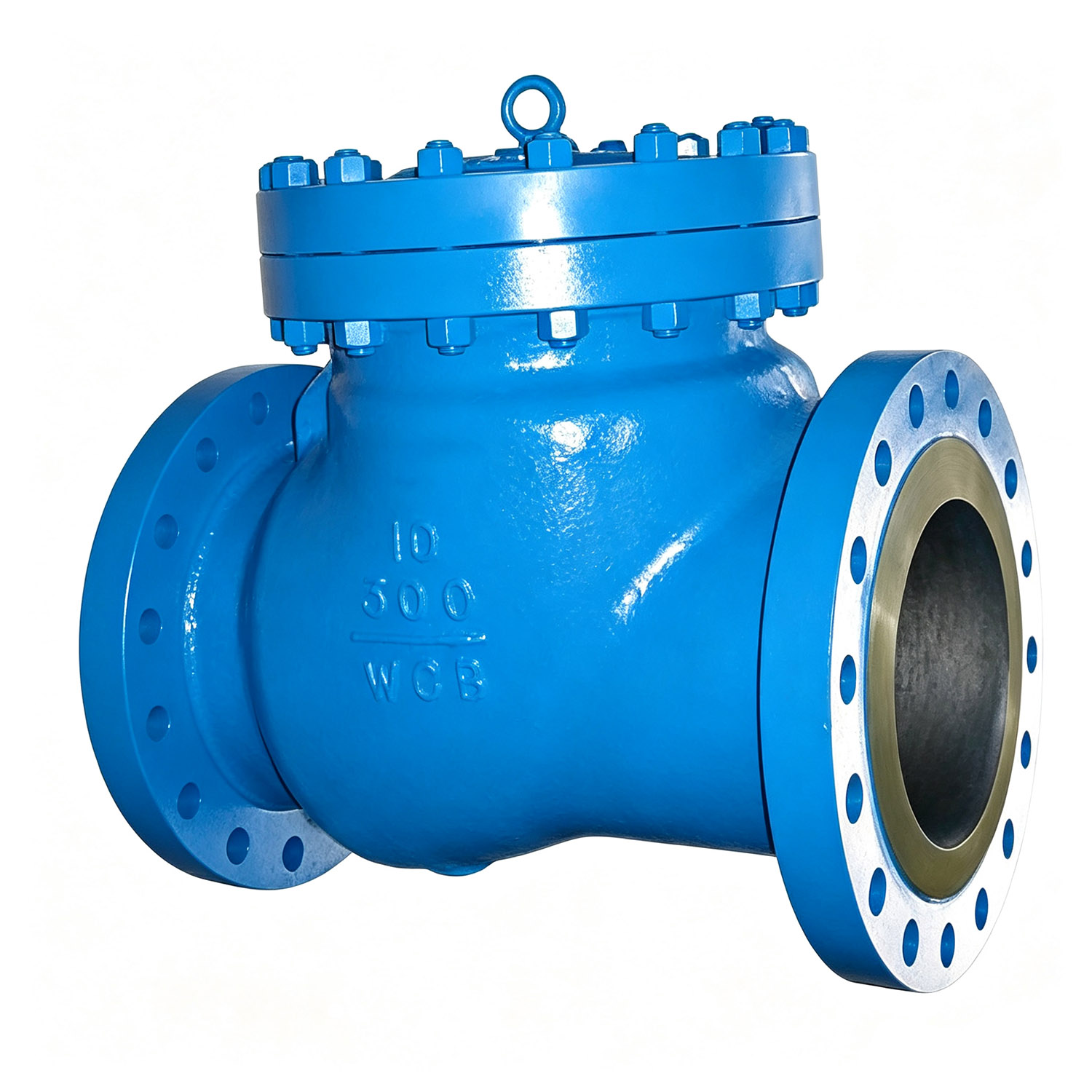



DN250 (10″) Class 300 ASTM A216 WCB Flanged Swing Check Valve CH057602
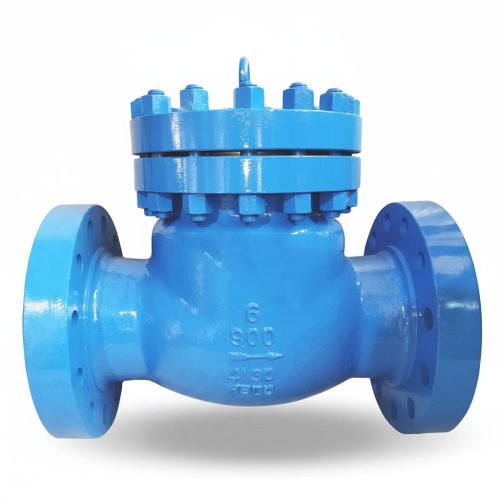
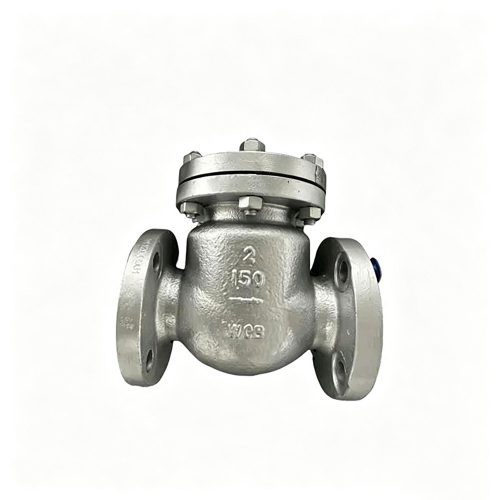
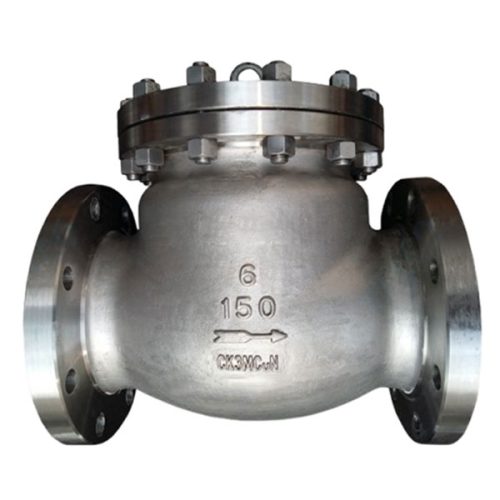
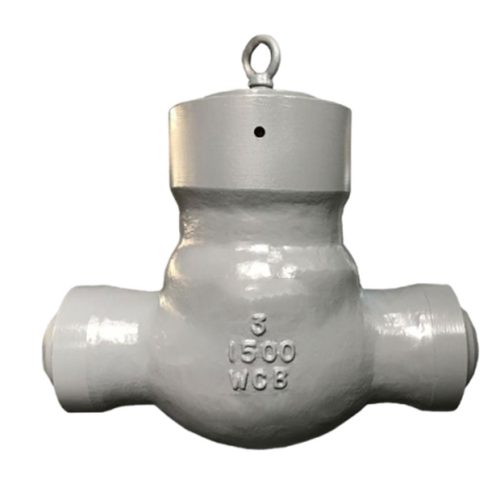
This DN250 (10″) Class 300 swing check valve is designed to API 6D. The body is cast steel A216 WCB, and the trim is 13% Cr+HF stainless steel. End connections are RF flanged to ASME B16.5. The valve operates automatically to prevent flow reversal. The swing disc provides reliable sealing, and the stainless trim offers good corrosion resistance. It is suitable for industrial pipeline systems that require backflow prevention under medium to high pressure conditions.
Product Attributes
| Valve Type | Check Valve |
|---|---|
| Check Valve Type | |
| Nominal Diameter (DN / NPS) | |
| Pressure Rating (PN / Class / JIS) | |
| Body Material | |
| Body Standard | |
| Disc / Trim Material | |
| Seat / Seal / Lining Material | |
| End Connection | |
| Connection Standard | |
| Design Standard | |
| Spring Material | |
| Cracking Pressure | |
| Operation / Actuation | |
| Suitable Media | |
| Application Industry | Chemical & Petrochemical, Industrial & Manufacturing, Oil & Gas, Power Generation |
| Certifications | |
| OEM / Custom Service | Custom Body Material, Custom Coating / Surface Treatment, Custom Degreasing / Cleaning, Custom Design / Engineering, Custom Documentation, Custom End Connections, Custom Face-to-Face Length, Custom Logo / Branding, Custom Packaging, Custom Pressure Rating, Custom Seat & Packing Material, Full Product Traceability, ODM Service, OEM Service, Private Label |
Product Specifications
Product Usage
- Industrial piping systems
- Oil, gas, and petrochemical services
- Power generation and process industries
- General fluid handling where backflow prevention is required
- Suitable for Class 150LB to 2500LB service
Construction Characteristics
- Body material: Cast steel A216 WCB
- Bolted bonnet (BB) construction for reliable body-to-bonnet joint
- Swing-type disc with external hinge pin design
- Trim: 13% Cr+HF stainless steel for enhanced corrosion resistance
- End connections: RF flanged as per ASME B16.5
- Automatic operation — disc responds to flow to prevent reverse flow
- Separate heavy-duty seat ring, full-ported for easy maintenance (screwed or welded into body)
- Eye-bolt provided (per size/pressure requirements: for Class 300, 3″ and above)
- Available with optional outside lever and weight for 12″ and smaller sizes
Certification
- Design and Manufacture: API 6D, BS 1868, API 603, ISO 14313
- Pressure-Temperature Rating: ASME B16.34
- Face to Face: ASME B16.10
- Flanged Connection: ASME B16.5, B16.47
- Butt-Welded Ends: ASME B16.25
- Test and Inspection: API 598, API 6D
- Body — ASTM A216 WCB
- Disc & Trim — 13% Cr + HF stainless steel
- Other designated materials
Other materials can be customized upon request.
| Pressure Class | Size | DN | L1 (RF) | L2 (RTJ) | H (open) | WT RF (kg) | WT BW (kg) |
|---|---|---|---|---|---|---|---|
| Class 150 | 2" | 50 | 203 | 206 | 175 | 20 | 14 |
| 3" | 80 | 241 | 245 | 191 | 35 | 26 | |
| 4" | 100 | 292 | 295 | 219 | 55 | 37 | |
| 6" | 150 | 267 | 270 | 324 | 96 | 80 | |
| 8" | 200 | 292 | 295 | 368 | 160 | 128 | |
| 10" | 250 | 330 | 333 | 425 | 245 | 213 | |
| 12" | 300 | 356 | 359 | 495 | 345 | 294 | |
| Class 300 | 1-1/2" | 40 | 241 | 254 | 188 | 31 | 28 |
| 2" | 50 | 267 | 283 | 197 | 35 | 32 | |
| 2-1/2" | 65 | 292 | 308 | 203 | 37 | 35 | |
| 3" | 80 | 318 | 334 | 222 | 60 | 50 | |
| 4" | 100 | 356 | 372 | 276 | 82 | 65 | |
| 5" | 125 | 400 | 416 | 295 | 110 | 70 | |
| 6" | 150 | 444 | 460 | 337 | 155 | 128 | |
| 8" | 200 | 533 | 549 | 413 | 268 | 230 | |
| 10" | 250 | 622 | 638 | 464 | 380 | 270 | |
| 12" | 300 | 711 | 727 | 562 | 495 | 460 | |
| 14" | 350 | 838 | 854 | 597 | 710 | 555 | |
| 16" | 400 | 864 | 880 | 645 | 950 | 800 | |
| 18" | 450 | 978 | 994 | 759 | 1200 | 970 | |
| 20" | 500 | 1016 | 1035 | 854 | 1350 | 1070 | |
| 24" | 600 | 1346 | 1368 | 940 | 2200 | 1780 | |
| 30" | 750 | 1594 | 1619 | 1270 | 3400 | 2950 | |
| 36" | 900 | 2083 | 2111 | 1540 | 5000 | 4300 | |
| Class 900 | 2" | 50 | 368 | 371 | 188 | 48 | 33 |
| 2-1/2" | 65 | 419 | 422 | 210 | 63 | 44 | |
| 3" | 80 | 381 | 384 | 210 | 60 | 42 | |
| 4" | 100 | 457 | 460 | 216 | 122 | 76 | |
| 6" | 150 | 660 | 613 | 368 | 254 | 177 | |
| 8" | 200 | 787 | 740 | 511 | 511 | 383 | |
| 10" | 250 | 914 | 841 | 614 | 938 | 703 | |
| 12" | 300 | 991 | 968 | 705 | 1448 | 1128 | |
| 14" | 350 | 1029 | 1038 | 736 | 1723 | 1353 | |
| 16" | 400 | 1130 | 1140 | 756 | 1832 | 1463 |
Industrial Applications



Why Choose Our WCB Swing Check Valves?
1) CE (2014/68/EU), UKCA, API, ASME, ISO 9001 certified. Full compliance with global pressure equipment and quality management standards – no regional restrictions, no documentation gaps.
2) Sizing based on actual system dynamics, not rule-of-thumb. We don’t apply generic “safety factors” to determine valve size or closure response. Each quotation includes a dynamic flow analysis (steady-state and transient) cross-referenced against your piping layout, pump curves, and potential surge events. You receive a recommended sizing and closure timing justification for every installation point.
3) Strict testing standards. You will receive test certificates of each WCB flanged swing check valve issued by our laboratory or any third-party institution that you have designated – hydrostatic shell, seat leakage, and backflow seal tests fully documented.
4) Slamming and water hammer prevention validated per valve. Every swing check valve is tested for disc response time and reverse flow velocity at maximum system differential pressure. The measured closing time and critical slam-free flow velocity are laser-etched on the body nameplate. When you design your surge protection strategy, you work with actual valve dynamics, not generic estimates.
5) Seat and disc hardfacing integrity verified per valve. We test every assembled valve for seat-to-disc sealing face hardness and overlay thickness (13Cr + HF). Individual readings documented per valve. No “batch representative” logic for wear resistance or high-temperature stability.
6) Cavitation and erosion risk mapped for your service. For high-pressure or dirty fluid services, we provide a localized velocity profile and a recommended pressure drop distribution across the valve. You get a table of safe differential pressure limits for sustained operation without seat or hinge pin erosion.
7) Fifteen years of field wear data back every material recommendation. When you order a valve, you receive an anonymized summary of identical or similar service duty (fluid composition, temperature, cycle frequency) from our field archives, including observed hinge pin wear, seat ring degradation rates, and recommended maintenance intervals.
8) Documentation is not an extra – it’s a serial number’s companion. Enter your valve’s serial number on our portal: you get EN 10204 3.1 mill certificates, NDE reports (RT/PT/MT) for body and bonnet, hardness verification, hinge pin clearance measurement, and the original assembly torque/clearance log. No separate request form, no waiting.
9) Face-to-face and bolting dimensions kept stable across revisions. We do not change ASME B16.10 face-to-face dimensions or flange bolt circle patterns without a 5‑year advance notice. Check valves bought today will replace valves bought five or ten years ago with zero piping modification – no spool pieces, no re-welding.
10) Performance witness test is your right, not a premium. Any valve order includes one free witness test (your inspector or a third party) at our facility, with a 48‑hour notice. Witness includes hydrostatic shell test, seat leakage test, and disc opening/closing stroke verification. No “witness fee”, no minimum quantity.
Frequently Asked Questions
Sizing a check valve is based on flow rate and allowable pressure drop. A common mistake is simply matching the pipe size — this often leads to an oversized valve, causing the disc to flutter and wear out prematurely. An undersized valve creates excessive pressure drop and restricts flow.
Evaluate your system’s minimum and maximum flow rates, then consult the manufacturer’s Cv data to select a size that operates efficiently across that range. As a rule of thumb, the valve should run at 60%–80% open under normal conditions. Also consider fluid viscosity — thicker fluids need larger ports. When in doubt, contact our technical team with your system specs for a verified recommendation.
Water hammer occurs when flow suddenly stops or reverses, and the check valve disc slams shut against the seat, creating a high-pressure shockwave that travels through the piping system. This is often caused by using a valve that closes too quickly for the system’s flow velocity, or by installing a swing check valve in a long piping run where reverse flow velocity builds up before the disc fully closes.
To prevent water hammer:
-
Choose a “silent” or “non-slam” check valve — these feature a spring-assisted disc that begins closing before the flow fully reverses, avoiding rapid impact against the seat.
-
Consider a slow-closing check valve or a valve with an external dashpot or dampening mechanism that controls closure speed.
-
Ensure the valve is correctly sized — oversizing increases the distance the disc travels, worsening slam; proper sizing keeps the disc near the seat at normal flow.
-
For pump discharge applications, a combination of a check valve and a control valve with a controlled ramp-down can eliminate water hammer entirely.
If you are experiencing water hammer in an existing system, start by verifying that the flow velocity does not exceed 10–15 ft/s (3–4.5 m/s) for liquid services — this is often the root cause.
Yes, but it depends on the type of check valve. Most spring-loaded check valves can be installed in any orientation, including vertical, because the spring assists disc closure regardless of position. However, swing check valves rely on gravity to return the disc to the seat, so they are typically recommended for horizontal pipelines only. If a swing check valve must be installed vertically, flow direction must be upward to assist the disc in closing properly when flow stops.
Other types have different constraints:
-
Lift check valves are generally suitable for vertical lines with upward flow
-
Wafer or dual-plate check valves often allow vertical installation but check the manufacturer’s specification
Always review the manufacturer’s installation instructions for specific orientation requirements before ordering.
Cracking pressure is the minimum upstream pressure required to just open the valve and allow flow. It is a critical selection parameter because it determines the pressure threshold at which the valve will operate. If your system has a low inlet pressure, a check valve with a cracking pressure that is too high will not open, starving the downstream system. Conversely, too low a cracking pressure might lead to premature opening or disc flutter.
As a general rule, choose a check valve with a cracking pressure of approximately 10% to 20% of the minimum operating pressure of your system. Spring-loaded check valves typically have higher cracking pressures than swing or silent check valves, which rely on gravity or flow dynamics. Always verify this parameter against your system’s low-flow conditions — especially during startup or turndown scenarios.
The core difference lies in their function and operation. A check valve is an automatic, self-actuating safety device that allows fluid to flow in only one direction to prevent backflow — it requires no manual intervention and operates entirely based on line pressure. A ball valve, on the other hand, is a quarter-turn manual or actuated valve that an operator uses to start, stop, or throttle flow — it does not respond to system conditions automatically.
In practice, these two valves serve complementary roles and are often installed together. A ball valve upstream of a pump provides isolation for maintenance, while a check valve downstream prevents reverse flow when the pump shuts off. Using one as a substitute for the other is a common design error: a ball valve left partially open offers no backflow protection, and a check valve cannot be used to shut off flow for service.
If you are selecting a valve for a pump discharge line, you will typically need both — a ball valve for isolation and a check valve for backflow prevention. They work together, not in competition.
| Stage | Procedure | Description |
|---|---|---|
| Before Production | PMI (Positive Material Identification) test | Raw material verification |
| In-Production | Dimensional checks | At critical machining stages |
| Post-Production | High-pressure hydrostatic shell test (1.5× rated pressure) Low-pressure air seat test (0.6 MPa) to verify shut-off Optional tests: helium leak test (ISO 15848), fire-safe test, or cryogenic test | Final assembly testing |
| Quality Inspection | Marking verification, coating/painting thickness measurement, and preparation of traceable test reports | Visual & documentary check |
All test records are archived for a minimum of 10 years and can be provided with each shipment. Or you can specify any third-party test institutions.
Our manufacturing facility is certified to ISO 9001:2015 for design, production, and after-sales service of industrial valves. Additionally, we hold ISO 14001:2015 (environmental management) and ISO 45001:2018 (occupational health and safety). All our ball valves for the European market comply with PED 2014/68/EU, and we can supply valves with ATEX certification for explosive atmospheres upon request. Our quality system is audited annually by third-party notified bodies.
Absolutely. For standard ball valves, we can offer off-the-shelf samples of common sizes (1/2″ to 4″) at a discounted price, with a refundable deposit that can be credited toward a future bulk order. For custom or larger sizes, we accept small trial orders (as few as 2–5 pieces) after a non-recurring engineering (NRE) fee is agreed. The NRE fee will be waived once the customer proceeds to a production order of 50 pieces or more.
We offer flexible payment terms based on order value and customer history. For standard orders: 30% deposit by T/T (wire transfer) with 70% balance before shipping. For larger or repeat customers, we can consider 20% deposit + 80% balance payment.
- For standard models, the minimum order quantity (MOQ) is usually 100 pieces per size. For sizes that are in stock, it takes 3 to 5 business days to ship after you place your order. Our usual lead time for making standard catalog valves that aren’t in stock is 15 to 25 business days after we get your order and approve the drawing.
- Custom models (with special materials, pressure classes, actuator mounting, custom logos, etc.): The minimum order quantity (MOQ) varies, so please get in touch with our sales team for a full quote. The lead time is usually 15 to 45 days, depending on how complicated the process is. Also, we offer a mixed-model consolidation service for distributors to help them deal with their inventory problems.
Looking for A Reliable Industrial Valve Manufacturer?
Our factory is equipped with a complete set of production facilities (three-axis, four-axis, and five-axis CNC machining centers, large vertical lathes, special process processing equipment, as well as fully automatic welding and sealing surface grinding equipment, etc.) and a testing laboratory, and implements a strict quality management system that has obtained ISO 9001 certification.
If you choose to cooperate with us, we will provide a complete set of certifications for each batch of valves: API 6D, API 600, API 607, CE/PED, TSG, ISO 15848-1 or other industry access certifications for specific fields. If you require us to provide testing and quality control, we will carry out non-destructive testing (NDT), material spectroscopy analysis, high-pressure gas tests, low-pressure airtight tests, torque tests, life cycle tests, and so on.
Each of our valves has a unique furnace batch number and serial number, which can be traced back to the raw material composition and assembly records. We also offer OEM/ODM services, and can customize special valves (design, materials, diameter, tolerance…) that meet the requirements of specific application scenarios for your special projects.
Leave An Inquiry
Please submit your inquiry via the form below or email [email protected]; Our team guarantees a response within 24 hours.