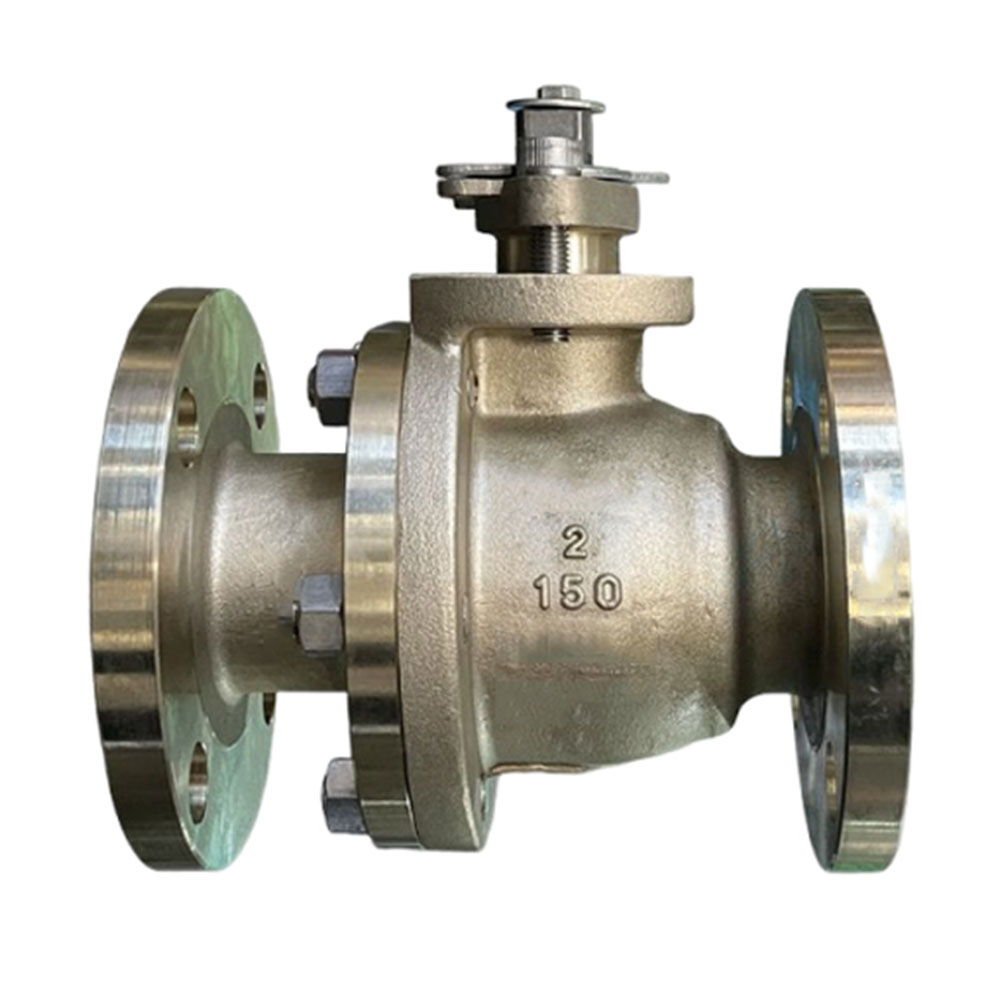




DN50 (2″) Class 150 Al-Bronze Flanged Floating Ball Valve BL357502
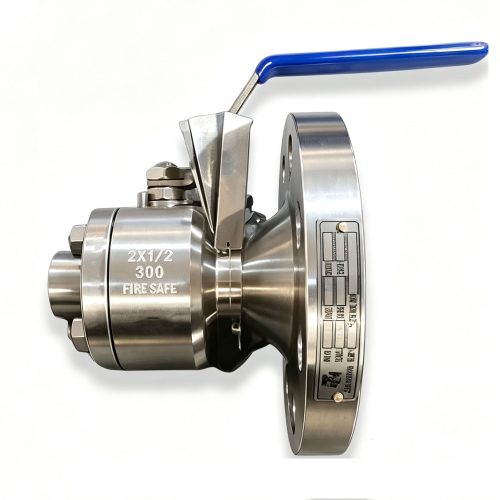
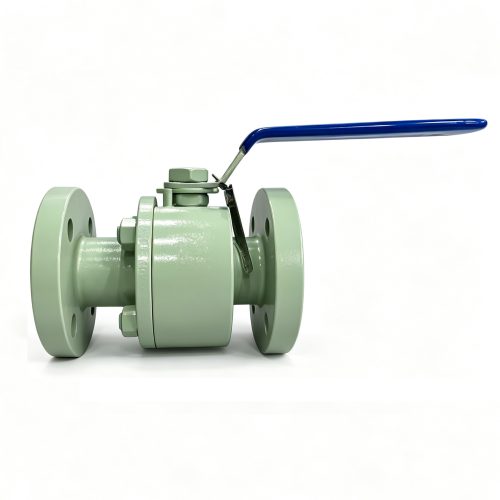
This 2″ (DN50) Class 150 Al-Bronze flanged floating ball valve has a full port and a cast bronze body (ASTM B148 C95800). It comes with a lever handle for manual operation. The valve suits many applications, including desalination, chemical processing, water treatment, marine, and pulp & paper. The Al-Bronze body resists corrosion well, and the PTFE/RPTFE seats give reliable sealing. It is designed to API 608, ASME B16.34, and BS 5351.
Product Attributes
| Valve Type | Ball Valve |
|---|---|
| Nominal Diameter (DN / NPS) | |
| Pressure Rating (PN / Class / JIS) | |
| Port Type | |
| Structure Type | |
| Body Material | |
| End Connection | |
| Connection Standard | |
| Face-to-Face Dimension | |
| Design Standard | |
| Operation / Actuation | |
| Seat / Seal / Lining Material | |
| Suitable Media | |
| Application Industry | Desalination, General Chemical, HVAC Systems, Industrial & Manufacturing, Industrial Water Treatment, Oil & Gas, Power Generation, Water & Wastewater Treatment |
| Certifications | API 598, API 607, API 608, API 6D, API 6FA, ASME B16.34, BS 5351 |
| OEM / Custom Service | Custom Actuator Mounting, Custom Body Material, Custom Coating / Surface Treatment, Custom Degreasing / Cleaning, Custom Design / Engineering, Custom Documentation, Custom End Connections, Custom Face-to-Face Length, Custom Logo / Branding, Custom Packaging, Custom Pressure Rating, Custom Seat & Packing Material, Full Product Traceability, ODM Service, OEM Service, Private Label |
Product Specifications
Product Usage
-
Desalination plants
-
Chemical processing industries
-
Water treatment facilities
-
Marine and shipboard systems
-
Pulp and paper manufacturing
-
Geothermal energy systems
-
Landfill gas collection
-
Oil and gas services
-
Corrosive media handling
-
Seawater applications
Construction Characteristics
-
Body material: ASTM B148 C95800 (Al-Bronze)
-
Cast bronze body construction
-
Floating ball design
-
Full port / full bore
-
RF flanged end connections per ASME B16.5
-
Lever handle operation
-
Seat material: PTFE, RPTFE
-
Fire-safe design per API 607, API 6FA
-
Anti-static design
-
Blow-out proof stem
-
Low operating torque
-
Bidirectional flow capability
-
Available with ISO 5211 mounting pad for actuation
Certification / Compliance Standards
-
Design and Manufacture: API 608, ASME B16.34, BS 5351
-
Face to Face (End to End): ANSI B16.10, API 6D
-
Flanged Connection: ANSI B16.5 (½″ – 24″)
-
Fire-Safe: API 607, API 6FA
-
Butt Welded End: ANSI B16.25
-
Test and Inspection: API 598, API 6D
-
Pressure Rating: ANSI Class 150
-
Body: ASTM B148 C95800 (Al-Bronze)
-
Ball: Al-Bronze (matching body material)
-
Stem: Stainless Steel (ASTM A182 F6a or equivalent)
-
Seat: PTFE, RPTFE
-
Seal / Gasket: PTFE, RPTFE
-
Fasteners: Stainless Steel
-
Handle: Lever Handle (steel with vinyl grip or equivalent)
| NPS (in) | Class | L (mm) | D (mm) | d (mm) | H (mm) | W (mm) | WT (kg) |
|---|---|---|---|---|---|---|---|
| 1/2″ | 150 | 108 | 12.7 | 9.5 | 54 | 140 | 2.1 |
| 3/4″ | 150 | 117 | 19 | 12.7 | 59 | 140 | 3 |
| 1″ | 150 | 127 | 25.4 | 19 | 64 | 160 | 4.1 |
| 1-1/2″ | 150 | 165 | 38 | 30 | 90 | 160 | 6.5 |
| 2″ | 150 | 178 | 51 | 38 | 102 | 260 | 9 |
| 2-1/2″ | 150 | 190 | 64 | 51 | 112 | 260 | 11.2 |
| 3″ | 150 | 203 | 76 | 64 | 121 | 260 | 15.3 |
| 4″ | 150 | 229 | 102 | 76 | 166 | 320 | 28.6 |
| 2″ | 300 | 216 | 51 | 38 | 102 | 260 | 12 |
| 3″ | 300 | 282 | 76 | 64 | 121 | 260 | 23 |
Notes:
-
L = Face-to-face length (end-to-end) per ASME B16.10.
-
D = Flange outer diameter.
-
d = Flange bore diameter.
-
H = Overall height of valve.
-
W = Diameter of handwheel or lever.
-
WT = Approximate unit weight (kg).
All dimensions are in mm.
For exact dimensions and weights, please contact us for more details.
Industrial Applications



Why Choose BallValve Technology’s Al-Bronze Flanged Floating Ball Valves?
1) CE (2014/68/EU), UKCA, API, ASME, ISO 9001 certified. Full compliance with global pressure equipment and quality management standards – no regional restrictions, no documentation gaps.
2) Corrosion-resistant ASTM B148 C95800 Al-Bronze construction. The cast Al-Bronze body provides excellent resistance to corrosion, seawater, and many chemical media, ensuring long service life in demanding environments such as marine and chemical processing applications.
3) Full port design for maximum flow efficiency. The full port / full bore design minimizes pressure drop, reducing energy consumption and optimizing system performance.
4) PTFE/RPTFE seats for reliable sealing. The PTFE/RPTFE seat materials offer excellent chemical resistance, low friction, and reliable sealing across a wide range of temperatures and media.
5) Fire-safe and anti-static design. Compliant with API 607 and API 6FA fire-safe standards and featuring anti-static design, this valve is suitable for use in critical applications where safety is paramount.
6) Blow-out proof stem for enhanced safety. The stem is designed to be blow-out proof, ensuring safe operation even under high pressure conditions.
7) 90° quick operation with lever handle. The lever handle allows for quarter-turn operation, making it easy to open and close the valve quickly.
8) Ten years of field wear data back every design margin. When you order a valve, you receive an anonymized summary of identical or similar service duty (fluid, temperature, cycle frequency) from our field archives, including observed wear patterns, seat degradation rates, and maintenance recommendations.
9) Documentation is not an extra – it’s a serial number’s companion. Enter your valve’s serial number on our portal: you get EN 10204 3.1 mill certificates, NDE reports, material verification, and the original assembly torque log. No separate request form, no waiting.
10) Performance witness test is your right, not a premium. Any valve order includes one free witness test (your inspector or a third party) at our facility, with a 48‑hour notice. Witness includes hydrostatic shell test, seat leakage test, and full stroking verification. No “witness fee”, no minimum quantity.
Frequently Asked Questions
| Stage | Procedure | Description |
|---|---|---|
| Before Production | PMI (Positive Material Identification) test | Raw material verification |
| In-Production | Dimensional checks | At critical machining stages |
| Post-Production | High-pressure hydrostatic shell test (1.5× rated pressure) Low-pressure air seat test (0.6 MPa) to verify shut-off Optional tests: helium leak test (ISO 15848), fire-safe test, or cryogenic test | Final assembly testing |
| Quality Inspection | Marking verification, coating/painting thickness measurement, and preparation of traceable test reports | Visual & documentary check |
All test records are archived for a minimum of 10 years and can be provided with each shipment. Or you can specify any third-party test institutions.
Our manufacturing facility is certified to ISO 9001:2015 for design, production, and after-sales service of industrial valves. Additionally, we hold ISO 14001:2015 (environmental management) and ISO 45001:2018 (occupational health and safety). All our ball valves for the European market comply with PED 2014/68/EU, and we can supply valves with ATEX certification for explosive atmospheres upon request. Our quality system is audited annually by third-party notified bodies.
Absolutely. For standard ball valves, we can offer off-the-shelf samples of common sizes (1/2″ to 4″) at a discounted price, with a refundable deposit that can be credited toward a future bulk order. For custom or larger sizes, we accept small trial orders (as few as 2–5 pieces) after a non-recurring engineering (NRE) fee is agreed. The NRE fee will be waived once the customer proceeds to a production order of 50 pieces or more.
We offer flexible payment terms based on order value and customer history. For standard orders: 30% deposit by T/T (wire transfer) with 70% balance before shipping. For larger or repeat customers, we can consider 20% deposit + 80% balance payment.
- For standard models, the minimum order quantity (MOQ) is usually 100 pieces per size. For sizes that are in stock, it takes 3 to 5 business days to ship after you place your order. Our usual lead time for making standard catalog valves that aren’t in stock is 15 to 25 business days after we get your order and approve the drawing.
- Custom models (with special materials, pressure classes, actuator mounting, custom logos, etc.): The minimum order quantity (MOQ) varies, so please get in touch with our sales team for a full quote. The lead time is usually 15 to 45 days, depending on how complicated the process is. Also, we offer a mixed-model consolidation service for distributors to help them deal with their inventory problems.
Our custom process:
- First, we will confirm your requirements (temperature, pressure, medium, connection standards, special requirements, etc.).
- After confirming the requirements, our engineers will go through several rounds of design and modification to produce a technical solution (2D/3D drawings, material list, finite element strength verification);
- We will next confirm with you whether the design solution meets the requirements and make adjustments according to your suggestions;
- After you fully confirm, we will carry out production and quality inspection (full-size inspection, PMI material re-inspection, liquid/gas pressure test, low leakage test), or send the product to the third-party testing institution you specify for quality inspection;
- Delivery documents: factory certificate of conformity, material certificate (EN 10204 3.1/3.2), test report, installation operation and maintenance manual (O&M), and 3D model.
- Full-port: The ball bore matches the pipe inner diameter, creating no additional pressure drop. Ideal for pressure-drop-sensitive systems (e.g., pump discharges, metering sections).
- Reduced-port (typically one or two sizes smaller): Lower cost, but introduces a pressure drop of roughly 10–30%.
- We provide Cv value tables or use simulation software to recommend the correct size based on flow rate and allowable pressure drop. For clean-media lines DN50 and above, a reduced-port valve can save cost; if the media contains particles or requires pigging, a full-port valve must be used.
- Installation: Verify the flow direction (though bidirectionally sealing, we still recommend following the arrow). Tighten flange bolts diagonally and evenly to avoid body distortion.
- Torque: If manual operating torque suddenly increases to more than 1.5 times the factory value, do not force the valve. Common causes are media crystallization or seat wear – inject a specialized cleaning solvent, let it soak, then operate slowly.
- Maintenance: Inject lubricant through the grease fitting every 6 months. For valves that remain inactive for long periods, cycle them once per quarter. We provide a detailed maintenance manual and spare repair kits (seats, gaskets, stem O-rings).
All our ball valves have top stems designed to ISO 5211 (F03/F05/F07/F10/F12/F14) standards, making them directly compatible with most mainstream actuator brands. If you already have actuators (e.g., Biffi, Rotork, or domestic models), simply provide the stem dimensions and bolt circle diameter of the mounting pad, and we can manufacture a custom adapter bracket and stem extension.
All our standard ball valves (especially carbon steel and stainless steel) come standard with an anti-static device (electrical continuity between stem and ball) and a fire-safe structure complying with API 607 or ISO 10497. Trunnion ball valves can also be supplied with API 6FA certification. We can provide fire test reports, anti-static test reports, as well as PED, ATEX, and ISO 9001 certificates with each shipment.
- PTFE / modified PTFE: Temperature range -29~+200°C, excellent corrosion resistance, suitable for clean media, with a standard service life of tens of thousands of cycles.
- PEEK: Maximum temperature +250°C, better wear and steam resistance, ideal for high-temperature, high-pressure, or frequent operation.
- Metal-seated (hard seal): Temperature range -29~+450°C, erosion resistant, suitable for granular, high-viscosity, or high-temperature steam media.
We will recommend a specific shut-off class based on your actual temperature, media cleanliness, and switching frequency.
| Medium Category | Typical Media | Recommended Materials |
|---|---|---|
| Neutral or Mildly Corrosive | Tap water, non-corrosive gases (air, nitrogen), oils (lubricating oil, hydraulic oil), low-pressure steam | Carbon steel: High pressure, high temperature Cast iron: Low pressure water, oil, gas systems Brass: Water, air, oil, gas ( avoid using for seawater or desalinated water) |
| Corrosive Chemicals | Acids (e.g., sulfuric, hydrochloric), alkalis, solvents, salt solutions, oxidizers | Stainless steel (304/316): Generally applicable Plastics (PVC, CPVC, PVDF): Low pressure, strong acids/bases, brine, solvents Special alloys (Hastelloy, Monel, Titanium, Alloy 20): Extreme corrosive media (hot concentrated acids, chlorides) Ceramics: Highly corrosive, abrasive, or high-temperature slurries |
| Seawater / Chlorine-Containing | Seawater, brine, chlorinated water | Stainless steel 316/316L: Good resistance to pitting from chlorides Special alloys (Duplex stainless steel, Super austenitic stainless steel, Titanium): More severe high-chloride environments Plastics (PVC, PVDF) |
| Food, Pharmaceutical & High Purity | Beverages, dairy products, pharmaceuticals, ultrapure water | Stainless steel 316L: Preferred Selected plastics ( food-grade PTFE, PVDF): Applications with strict limits on metal ion content |
| High Temperature or High Pressure | High-pressure steam, hot oil, high-temperature process fluids | Stainless steel Carbon steel: High-temperature, high-pressure steam and oil/gas Special alloys (chrome-moly steel, superalloys): Extreme high temperature / pressure |
Key factors to consider during selection:
- Media compatibility (primary condition): It is essential to ensure that the material can resist chemical corrosion by the medium. You can refer to the
- material corrosion data handbook or request a material selection guide from the valve manufacturer.
- Temperature and pressure: The mechanical strength of the material (such as yield strength) will change with temperature. Ensure that the material can withstand the system pressure at the operating temperature.
- Balance the initial cost and service life.
- Internal component materials: The corrosion resistance of the valve body does not mean the overall safety of the valve. The moving parts that come into contact with the medium, such as balls, valve stems, and valve seats, the material selection is often more critical because the corrosion of these components will directly affect the sealing performance. For example, valve seats often use elastic materials like PTFE to ensure sealing.
- For critical or complex operating conditions, it is recommended to consult valve manufacturers or material engineers. They can provide final recommendations based on the specific combinations of medium concentration, temperature, and pressure.
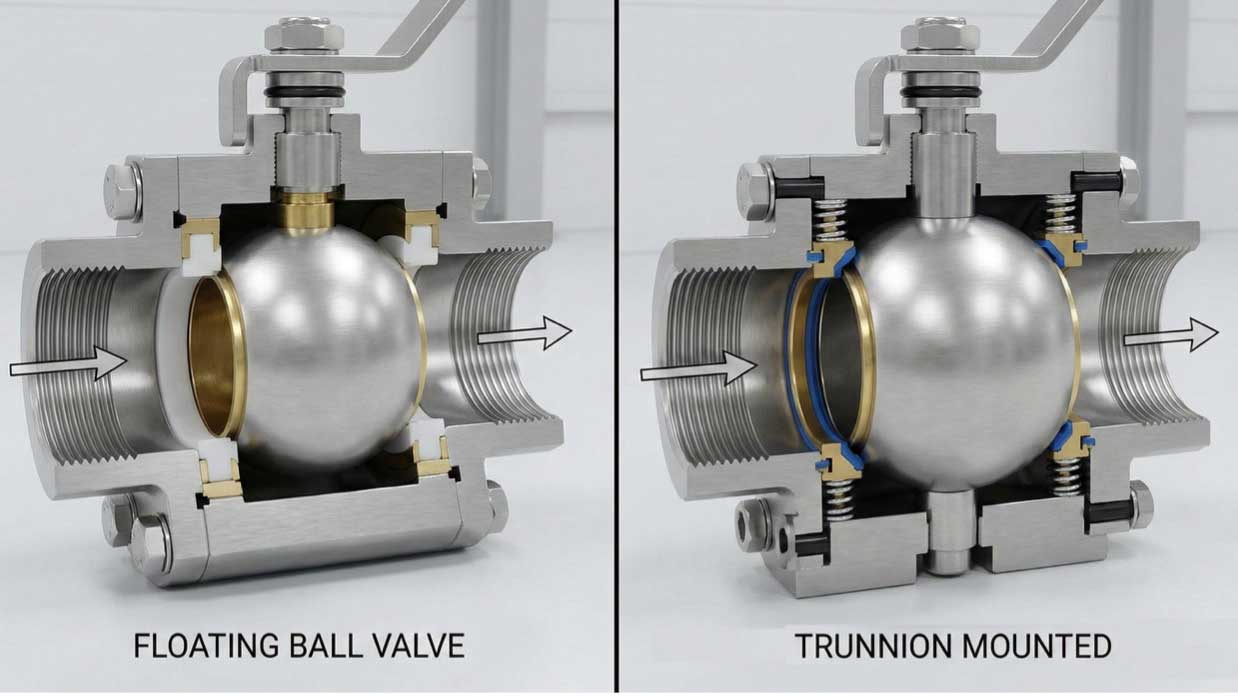
We offer pressure ratings from Class 150 to Class 2500 (PN16 to PN420) and size ranges from 1/2″ to 48″ (DN15 to DN1200). Floating ball valves are available up to DN200, while trunnion-mounted ball valves are used for DN50 and above. Non-standard pressure ratings or special sizes can also be manufactured upon request.
Looking for A Reliable Industrial Valve Manufacturer?
Our factory is equipped with a complete set of production facilities (three-axis, four-axis, and five-axis CNC machining centers, large vertical lathes, special process processing equipment, as well as fully automatic welding and sealing surface grinding equipment, etc.) and a testing laboratory, and implements a strict quality management system that has obtained ISO 9001 certification.
If you choose to cooperate with us, we will provide a complete set of certifications for each batch of valves: API 6D, API 600, API 607, CE/PED, TSG, ISO 15848-1 or other industry access certifications for specific fields. If you require us to provide testing and quality control, we will carry out non-destructive testing (NDT), material spectroscopy analysis, high-pressure gas tests, low-pressure airtight tests, torque tests, life cycle tests, and so on.
Each of our valves has a unique furnace batch number and serial number, which can be traced back to the raw material composition and assembly records. We also offer OEM/ODM services, and can customize special valves (design, materials, diameter, tolerance…) that meet the requirements of specific application scenarios for your special projects.
Leave An Inquiry
Please submit your inquiry via the form below or email [email protected]; Our team guarantees a response within 24 hours.